La Merveilleuse
Exposition collective
Hè stata ritrova.
Cosa ? -
L’Eternità
Vale à dì u mare
Unitu à u sole
Arthur Rimbaud, Maghju di u 1872

Commencer par un ver du poète pour mieux annoncer qu’il n’y a rien de nouveau sous ce soleil… Car la Méditerranée convoque en premier lieu un sentiment de permanence, une forme d’équanimité qui répond au ressac inlassable et tranquille d’une nature imperturbable.
U Mediterraniu ispira prima un sensu di permanenza, qualcosa cum’è un estru inalterabile in accordu cun l’eterna maretta serena di una natura impassibile.
Ce sont des images douces qui viennent à l’esprit, celle d’un ciel azuréen que le décompte des jours ne saurait faire trembler, celle des plaisirs lumineux qui se répètent à l’infini, celle d’une existence qui ne connaitrait pas l’entropie. Mais pareille sérénité est avant tout une représentation culturelle qui s’est affirmée avec la société des loisirs dans les années 1960 et le désir de profiter pleinement des vacances. La Méditerranée est devenue ainsi synonyme d’hédonisme et de nonchalance, de repos et de congés payés.
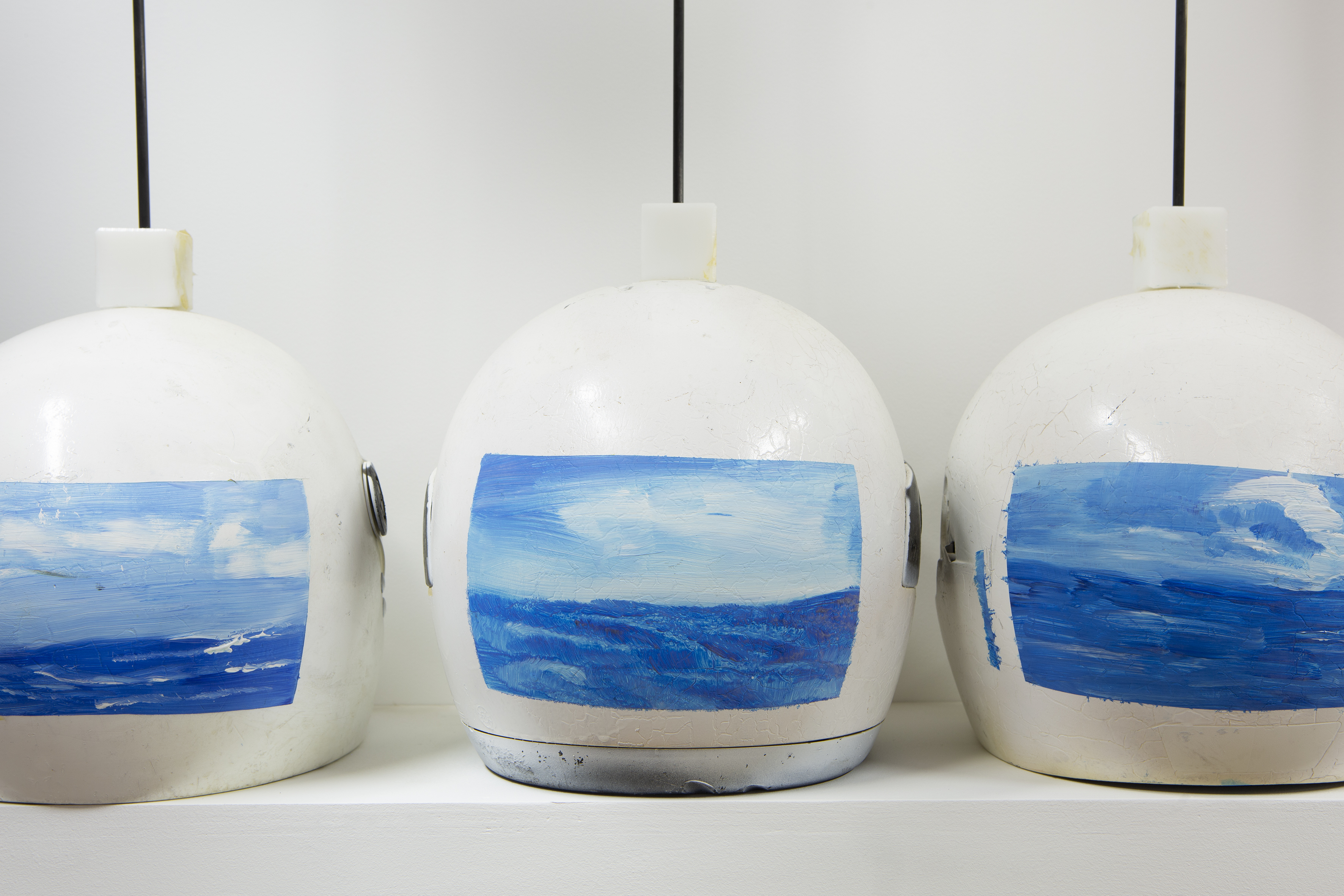
Il n’est pas surprenant alors que l’ironie transparaisse dans un grand nombre d’œuvres exposées ici. Car les artistes nous invitent souvent à un certain détachement à l’égard des croyances qui structurent nos sociétés, trop conscients qu’elles reposent avant tout sur des constructions historiques qui se naturalisent le long du temps.
L’artisti c’invitanu spessu à un distaccu da e cridenze chì anu tessu e nostre sucetà, essendu troppu cuscenti ch’elle sò arrimbate soprattuttu à custruzzione storiche naturalizate cù u tempu.
Dans cette perspective, La Merveilleuse peut paraitre quelque peu trompeuse. Certes, la douceur de vivre est bel et bien présente, mais il s’agit de ne pas être totalement dupe face à ce bonheur balnéaire.
Au regard des enjeux climatiques et politiques que la Méditerranée porte en elle aujourd’hui, il semble que cette région n’est pas simplement synonyme de luxe, de calme et de volupté. La Méditerranée a toujours été heurtée par les fracas de l’histoire. Aussi, tels des échos de la mémoire, on trouvera à l’étage deux œuvres qui ouvrent sur un univers de mystères issus de civilisations perdues. Ces mondes engloutis peuvent se lire comme les indices de notre propre fragilité. Ils nous font sentir en tout cas que le monde que nous connaissons est loin d’être immuable. De la sorte, notre seule certitude réside dans l’abandon de l’idée même de progrès. Pour le reste, nous nous en remettons aux puissances de l’imaginaire et du mythe, première manière de faire communauté.
U mondu ch’è no cunniscimu ùn hè manc’appena fermu pè u sempre.
